IBN News Informed. Independent. In Depth.

IBN News

Informed. Independent. In Depth.

Latest Articles

Beyond the Checkbox: What Disability Accommodation Practices Reveal About Corporate America's Real Values
Business & Markets

Beyond the Checkbox: What Disability Accommodation Practices Reveal About Corporate America's Real Values

Federal law mandates that employers provide reasonable accommodations to disabled workers, yet a significant gap persists between legal compliance and genuine workplace inclusion. An examination of accommodation denial rates, employee accounts, and organizational case studies reveals that how a company handles a disability request may be one of the most honest signals of its true internal culture. For many workers, the accommodation process itself has quietly become an unintended barrier to care

Bound by Contract: How Non-Compete Clauses Became a Hidden Brake on American Career Mobility
Business & Markets

Bound by Contract: How Non-Compete Clauses Became a Hidden Brake on American Career Mobility

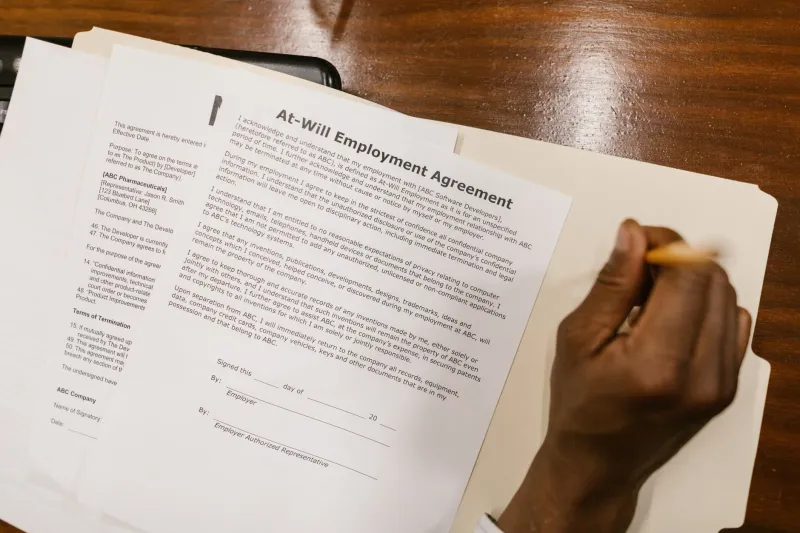
Once reserved for C-suite executives guarding trade secrets, non-compete agreements have quietly migrated into the employment contracts of sandwich shop workers, hair stylists, and software engineers alike. As enforcement battles play out in courtrooms and state legislatures across the country, the economic consequences—suppressed wages, stifled entrepreneurship, and constrained labor markets—are drawing scrutiny from regulators and researchers. IBN News examines how these contractual provisions

Promoted by Perception: How 'Culture Fit' Quietly Shapes Who Rises—and Who Stays Put
Business & Markets

Promoted by Perception: How 'Culture Fit' Quietly Shapes Who Rises—and Who Stays Put

Across American corporations, promotion decisions increasingly hinge not on measurable output but on intangible assessments of cultural alignment. A growing body of research suggests these subjective evaluations systematically favor certain demographic groups, creating invisible barriers that performance data alone cannot dismantle. IBN News examines the mechanics behind one of corporate America's most consequential—and least scrutinized—hiring practices.

Third-Party Employment: How Staffing Firms Quietly Took Over Corporate America's Workforce Strategy
Business & Markets

Third-Party Employment: How Staffing Firms Quietly Took Over Corporate America's Workforce Strategy

Staffing intermediaries have evolved from a niche convenience into a cornerstone of how large American companies manage their labor supply. As more workers find themselves employed by firms that have no direct relationship with the companies where they actually work, questions about wage equity, legal accountability, and worker protections have grown increasingly difficult to ignore.

Hired Without a Safety Net: The Hidden Economics of America's Contract Labor Surge
Business & Markets

Hired Without a Safety Net: The Hidden Economics of America's Contract Labor Surge

Corporations across the United States are quietly dismantling traditional employment structures, replacing full-time roles with contract arrangements that offer flexibility at a steep human cost. The contingent workforce has grown into a multi-trillion-dollar labor segment, yet most of the workers powering it remain invisible in quarterly earnings reports and boardroom conversations. An examination of the data reveals a structural shift with consequences that extend far beyond individual paychec

The Revolving Door Premium: What It Really Costs When Companies Lose the Talent They Burned Out
Business & Markets

The Revolving Door Premium: What It Really Costs When Companies Lose the Talent They Burned Out

A troubling pattern has emerged in corporate America's workforce data: companies are spending significant sums to recruit replacements for employees they could have retained, often hiring people with near-identical skill sets at considerably higher salaries. Exit interview analytics and recruitment cost research expose a dysfunction cycle that quietly undermines profitability while leadership continues to treat turnover as an inevitable cost of doing business.

The Resignation Beneath the Surface: What Employee Turnover Data Is Really Telling Employers
Business & Markets

The Resignation Beneath the Surface: What Employee Turnover Data Is Really Telling Employers

Turnover rates across several major U.S. industries have reached levels that labor economists describe as structurally damaging, yet the reasons companies cite rarely match what workers are actually experiencing. An examination of Bureau of Labor Statistics data, confidential exit interview aggregates, and academic research into workforce psychology reveals a gap between official explanations and the forces genuinely driving talent out the door.

Equal Pay, Unequal Reality: The Data Behind Tech's Executive Gender Pay Gap
Business & Markets

Equal Pay, Unequal Reality: The Data Behind Tech's Executive Gender Pay Gap

Despite years of corporate diversity pledges and voluntary pay transparency initiatives, female executives in the technology sector continue to earn measurably less than their male counterparts. A closer look at proprietary compensation databases, recent litigation, and candid accounts from women in senior roles reveals a system that obscures disparities as often as it resolves them.

Corner Office Exodus: Why America's Most Experienced Executives Are Walking Away
Business & Markets

Corner Office Exodus: Why America's Most Experienced Executives Are Walking Away

A growing wave of mid- and senior-level executives is abandoning traditional corporate roles in favor of startups, private equity, and fractional leadership arrangements. The shift is quietly destabilizing succession pipelines at some of America's largest companies, raising urgent questions about how organizations attract and retain the leadership talent they need to compete.

Reskilling or Rhetoric? The Widening Gulf Between AI Promises and Worker Reality
Personal Finance

Reskilling or Rhetoric? The Widening Gulf Between AI Promises and Worker Reality

Corporate America has spent billions announcing ambitious workforce retraining programs as artificial intelligence reshapes entire job categories. But for millions of American workers, the gap between those pledges and on-the-ground reality is growing wider by the month—and new data suggests the consequences could be severe.

Billions Spent, Nothing Solved: Corporate America's Hybrid Work Crisis
Business & Markets

Billions Spent, Nothing Solved: Corporate America's Hybrid Work Crisis

Fortune 500 companies have poured staggering sums into hybrid workplace strategies, yet employee compliance remains low and executive confidence lower still. A growing body of contradictory research, costly real estate pivots, and persistent productivity debates suggest that American business may be no closer to a workable answer than it was four years ago.

The Quiet Boom: How Overlooked Heartland Cities Are Rewriting the Tech Map
Business & Markets

The Quiet Boom: How Overlooked Heartland Cities Are Rewriting the Tech Map

Secondary Midwest cities including Columbus, Madison, and Des Moines are drawing remote workers, venture capital, and technology startups at rates that would have seemed implausible a decade ago. The shift raises genuine questions about whether American economic geography is undergoing a durable realignment—or whether coastal dominance will reassert itself once the post-pandemic moment passes.

Office Parks on the Decline: How Mid-Sized Firms Are Rewriting the Rules of Corporate Real Estate
Business & Markets

Office Parks on the Decline: How Mid-Sized Firms Are Rewriting the Rules of Corporate Real Estate

Mid-market companies are quietly walking away from traditional suburban office campuses, opting instead for leaner, more flexible real estate footprints. The financial logic is compelling, but the ripple effects on commercial property markets across major US metros are only beginning to be understood. IBN News examines the forces driving this structural shift and what it means for investors, landlords, and the workforce.

Location-Based Pay in the Remote Era: Who Benefits and Who Gets Left Behind
Personal Finance

Location-Based Pay in the Remote Era: Who Benefits and Who Gets Left Behind

As remote work becomes a permanent fixture of the American labor market, a growing number of employers are adjusting compensation based on where employees live rather than what the work is worth. Workers in lower cost-of-living regions are increasingly finding themselves paid less for identical roles, raising pointed questions about fairness, transparency, and the future of wage equity. IBN News investigates the practice and its consequences.

The Lone Star Migration: Inside the Corporate Relocation Trend Reshaping American Business Geography
Business & Markets

The Lone Star Migration: Inside the Corporate Relocation Trend Reshaping American Business Geography

A growing roster of major American corporations has quietly shifted their headquarters from coastal business centers to Texas, drawn by a convergence of tax advantages, regulatory flexibility, and workforce economics. The trend, once dismissed as a temporary anomaly, now appears to reflect a durable restructuring of corporate geography — one with meaningful consequences for shareholders, employees, and the cities being left behind. IBN News examines the forces driving the migration and what it s

Living in One State, Working in Another: The Tax Agreement That Could Change Your Bottom Line
Personal Finance

Living in One State, Working in Another: The Tax Agreement That Could Change Your Bottom Line

Millions of American workers cross state lines every day without realizing that a quiet network of tax agreements may be reshaping their take-home pay. Reciprocal tax arrangements between neighboring states can mean the difference between a refund and an unexpected bill — but few workers fully understand how these compacts operate. IBN News breaks down the mechanics, the exceptions, and the strategies every cross-border employee should know.