The Delivery Discount That Isn't: How Apps Take a Bite Before the Restaurant Gets Paid
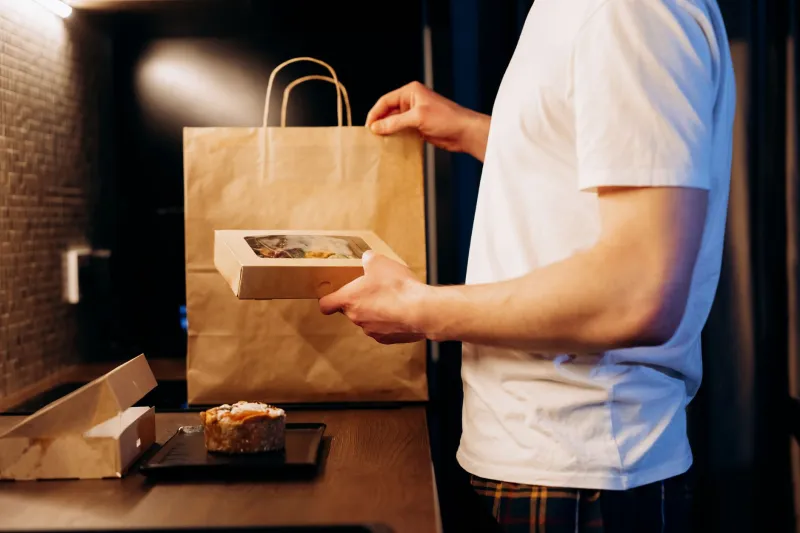
A customer taps an app, pays $30 for a burrito and a drink, and waits for a courier. At the restaurant, the owner sees a smaller number land in the register — often closer to $12 once commissions, promotions, packaging, and refunds are accounted for. The gap is the central economic fact of the third-party delivery business. Convenience for the customer is financed, in part, by the restaurant's margin.
That does not make delivery apps villains. They built logistics, payments, and demand-generation systems that many small restaurants could not replicate alone. But the economics are brutal for operators who depend on the apps for visibility and volume. As delivery becomes a larger share of American restaurant sales, the question is whether independents can afford the channel that is supposed to save them.
Where the money goes
Third-party platforms typically charge a commission on the food subtotal, often in a range that can run from the mid-teens to 30 percent or more, depending on the plan and market. On top of that, restaurants may pay for promoted placement, discounts, and “free delivery” offers that are partly funded by the merchant. Packaging is another cost, and it has risen as takeout volumes have grown.
There are also less visible charges. Refunds for missing items or cold food often come out of the restaurant's settlement. Chargebacks and customer-service adjustments can erode the final payout. A restaurant that prices a dish at $15 may receive $10 or less after the platform's share and the cost of the container.
A rough breakdown
Consider a $30 order. A 25 percent commission takes $7.50. A merchant-funded promotion might take another $3. Packaging could cost $1.50. Payment processing and adjustments might take $1. The restaurant is left with roughly $17 before food and labor costs. If the order includes multiple items and the commission applies to the food subtotal, the effective bite can be even larger. In many cases, the owner's final contribution margin is close to $12.
That math matters because restaurant margins are thin. Food costs, rent, insurance, and wages consume most of the revenue. A delivery order that looks profitable at the top line can be a loss leader at the bottom line if it cannibalizes dine-in sales or forces the kitchen to hire extra staff during peak hours.
Why restaurants sign up
Most independent operators do not love the platforms. They sign up because the apps control a large share of online discovery. A new restaurant may need delivery to reach customers who no longer walk the block. An established restaurant may need it to stay visible when competitors are promoted on the app's home screen.
The pandemic accelerated that dependence, but it did not create it. Delivery had been growing for years. What changed was the speed at which small operators adopted platforms without building their own ordering systems. Once customers are trained to order through an app, the restaurant's direct relationship with them weakens.
The margin squeeze
The result is a channel that can generate revenue without generating much profit. Operators describe a treadmill: to stay visible, they pay for promotions; to fulfill promotions, they absorb packaging and discount costs; to cover those costs, they raise menu prices; to keep customers, they absorb more of the price increase. The platform's fee is calculated on the food, but the restaurant's costs are calculated on everything.
Some restaurants have responded by creating separate delivery menus with higher prices. Others have reduced portion sizes or simplified packaging. Those tactics can protect margins, but they also risk customer satisfaction. The platform does not bear the reputational cost of a smaller portion. The restaurant does.
Experiments beyond the apps
A growing number of independents are testing direct ordering through their own websites, text-message systems, and branded apps. Direct orders avoid the marketplace commission, though they require marketing and customer service. Some restaurants use QR codes on receipts and packaging to pull delivery customers into their own systems.
Ghost kitchens and shared kitchen spaces offer another route. By separating delivery-only brands from dine-in operations, operators can test concepts with lower overhead. But ghost kitchens do not solve the commission problem by themselves. They simply change the cost structure around it.
Collective action is also emerging. Restaurant associations and local merchant groups have pushed for fee transparency and, in some cities, caps on delivery commissions during emergencies. Cooperatives and shared ordering platforms aim to give independents more bargaining power against the large apps. The results have been uneven, but the search for alternatives is real.
What comes next
The delivery business is maturing. Platforms are under pressure to show profits, and restaurants are under pressure to protect margins. Customers, meanwhile, have grown accustomed to convenience and may resist price increases that reflect the true cost of delivery.
Regulators are watching fee disclosure and contract terms. Local governments have experimented with commission caps, though the long-term effects are still debated. The most durable solution may be structural: more restaurants owning the customer relationship, more transparent pricing, and more competition among delivery channels.
For now, the $30 burrito remains a useful symbol. It is not simply a meal. It is a chain of margins, and the smallest player in the chain is often the one doing the cooking.