Signed Away: How Non-Compete Clauses Became a Tool for Trapping Ordinary Workers
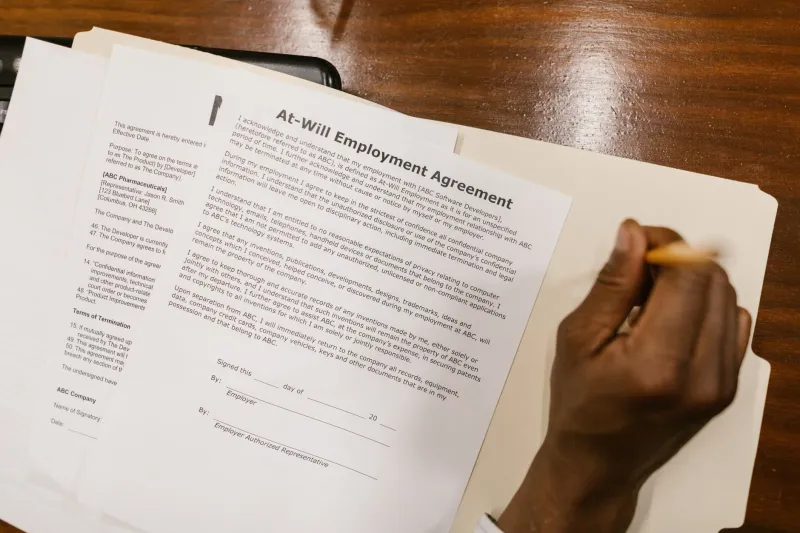
For decades, the non-compete agreement was understood to be a reasonable instrument of corporate protection — a legal mechanism designed to prevent a departing chief executive or senior engineer from walking directly into a rival's headquarters with a briefcase full of trade secrets. That understanding no longer reflects reality.
Today, an estimated 30 million American workers — roughly one in five members of the labor force — are bound by some form of non-compete clause, according to research from the Economic Policy Institute. The agreements now appear in contracts for security guards, call center employees, yoga instructors, and fast food workers. The expansion of these clauses into lower-wage and lower-skill occupations has fundamentally altered the balance of power between employers and employees, and a growing coalition of economists, legislators, and labor advocates argues that the damage extends well beyond the individuals directly affected.
From the Corner Office to the Break Room
The drift of non-compete language into everyday employment contracts did not happen by accident. Legal boilerplate, copied and adapted from executive agreements, was gradually inserted into standard offer letters as companies sought to limit turnover and suppress wage competition. Many workers who signed these documents had no idea what they were agreeing to — or that the clauses might one day be enforced against them.
A landmark 2021 survey conducted by researchers at the University of Maryland found that more than one-third of workers who had signed non-competes did not recall being told about the clause before accepting the job. A significant share reported receiving the document on their first day of work, after having already resigned from a previous position. The leverage, in other words, was entirely on the employer's side.
The practical consequences for affected workers can be devastating. A licensed cosmetologist in Tennessee, for example, may find herself legally barred from working within a 50-mile radius of her former salon for two years after leaving — effectively shutting her out of every employer in her metropolitan area. A software developer in a mid-sized city may discover that the non-compete he signed at a regional technology firm prevents him from accepting an offer from the only other company in his specialty within driving distance.
The Geography of Enforcement
One of the most consequential and least understood aspects of non-compete law is that enforcement varies dramatically by state. California, North Dakota, Oklahoma, and Minnesota have effectively banned the agreements outright, rendering them unenforceable regardless of what a contract says. In those states, workers are free to move between employers in the same industry without legal consequence.
Elsewhere, the picture is far murkier. States like Florida are known for aggressive enforcement, with courts regularly upholding broad restrictions that other jurisdictions would dismiss as unreasonable. Texas, Virginia, and Illinois occupy middle ground, with courts applying varying standards of scrutiny to the geographic scope, duration, and legitimate business interest requirements embedded in the clauses.
This patchwork creates perverse incentives. Workers in restrictive states who wish to remain in their chosen field may be forced to relocate — an option that is financially out of reach for many lower-income employees. Those who cannot move face a stark choice: comply with the restriction and accept unemployment or underemployment, or defy it and risk costly litigation from a former employer with far greater legal resources.
"The threat of a lawsuit is often enough," said one employment attorney who requested anonymity due to ongoing cases. "Most workers can't afford to litigate even a case they would win. The employer knows that. The clause doesn't have to be enforceable to be effective."
The Economic Cost Nobody Calculates
The macroeconomic consequences of widespread non-compete use are difficult to quantify but increasingly well-documented. Research published in the Journal of Human Resources found that non-compete agreements are associated with measurably lower wages in affected occupations — a finding consistent with the basic economic logic that restricting labor mobility reduces competition for workers and suppresses pay.
The Federal Trade Commission reached similar conclusions in its 2024 rulemaking process, estimating that banning non-competes for most workers could raise wages by an aggregate of roughly $300 billion per year and lead to the creation of tens of thousands of new businesses annually. Entrepreneurship, the FTC noted, is directly chilled when workers cannot leave an employer to start a competing firm.
That rule, which would have prohibited non-competes for the vast majority of American workers, was subsequently blocked by federal courts, leaving the regulatory landscape unresolved. The litigation over the FTC's authority to issue such a rule is ongoing, and its ultimate outcome remains uncertain.
The Legal Pushback Gathers Force
Despite the federal setback, momentum against non-compete agreements has continued to build at the state level. Minnesota became the most recent state to abolish them outright, with legislation taking effect in 2023. Several other states, including Illinois and Colorado, have enacted partial restrictions that prohibit the agreements for workers below certain income thresholds.
In Congress, bipartisan legislation known as the Workforce Mobility Act has been introduced multiple times, though it has yet to advance to a full vote. Supporters argue that the bill would restore competitive labor markets and align the United States with the practices of peer economies, most of which place far tighter limits on post-employment restrictions.
For now, the burden falls on individual workers to understand what they are signing — and on those already bound by these agreements to seek legal counsel before making career moves. Advocates recommend that workers in restrictive states consult an employment attorney before accepting any new offer in the same industry, as the cost of proceeding without advice can far exceed the cost of a single consultation.
What is clear is that the non-compete agreement, once a niche instrument of executive retention, has become something considerably broader: a structural feature of the American labor market that constrains mobility, depresses wages, and concentrates power in the hands of employers at the direct expense of the workers who signed documents they may not have fully understood.