Judged by the Machine: When Algorithmic Performance Tools Become the Arbiter of Your Career
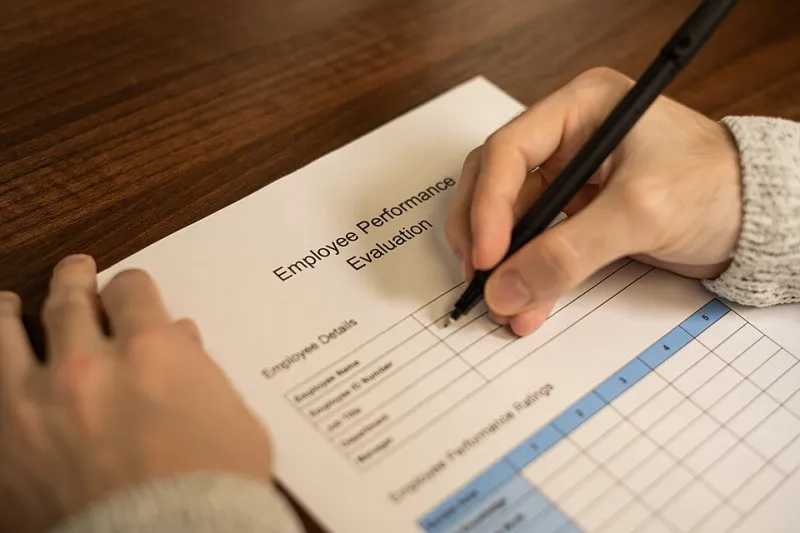
Photo: Digits.co.uk Images, CC BY 2.0, via Wikimedia Commons
For decades, the annual performance review was a familiar, if imperfect, ritual. A manager sat across from an employee, weighed subjective impressions against objective output, and arrived at a number that would shape raises, promotions, and futures. The process was flawed—vulnerable to favoritism, inconsistency, and bias. But it was, at minimum, human.
That is changing. Across a growing number of American companies, AI-powered performance management systems are assuming an increasingly central role in evaluating workers. These platforms ingest vast quantities of behavioral data—email response times, meeting attendance patterns, collaboration frequency, project completion rates, even keystroke activity—and synthesize it into scores that can determine who advances and who stagnates. The promise is objectivity. The reality, according to researchers, workers, and HR technologists, is considerably more complicated.
The Promise That Launched a Thousand Platforms
The market for AI-driven HR technology has expanded rapidly. Analysts at Grand View Research estimated the global HR technology market at over $40 billion in 2023, with performance management tools representing one of its fastest-growing segments. Vendors market these systems as antidotes to the subjectivity that has long plagued traditional reviews. By replacing managerial gut instinct with data-driven analysis, they argue, companies can identify true talent more reliably and fairly.
The appeal is understandable. Studies have consistently documented how conventional performance reviews disadvantage workers from underrepresented groups, with evaluators unconsciously favoring employees who share their backgrounds, communication styles, or social networks. An algorithm, the argument goes, has no such prejudices.
But critics argue that this framing misunderstands how bias actually operates. Algorithms do not generate their own criteria for excellence—they learn from historical data and the assumptions embedded by their designers. When that historical data reflects a workplace that already disadvantaged certain groups, the resulting system can perpetuate those disadvantages with far greater efficiency and apparent authority.
Inside the Black Box
The opacity of these systems is among the most frequently cited concerns. Unlike a manager whose reasoning can be questioned in a one-on-one conversation, an algorithmic score often arrives without explanation. Workers may know their rating but have no meaningful way to understand how it was calculated or what behaviors drove it downward.
Consider the case of a mid-level project manager at a technology services firm in the Mid-Atlantic region, who asked not to be identified by name due to fear of professional repercussions. After several years of strong conventional reviews, she received a significantly lower score from her company's newly implemented performance platform. When she requested clarification, her manager acknowledged being unable to explain the specific variables that had produced the result. The system, she was told, had flagged a decline in her "collaboration index"—a metric she had never previously been informed existed.
Her situation is not unusual. HR professionals who work with these platforms describe a recurring dynamic in which employees are evaluated against criteria they were never told to optimize for. The criteria themselves are often proprietary, shielded from scrutiny by the vendors who develop them.
"You are essentially asking workers to perform well on a test without showing them the syllabus," said one HR technology consultant who has advised multiple Fortune 500 companies on performance system implementations. "And when you can't see the rubric, you can't meaningfully contest the grade."
Whose Work Style Wins?
Beyond opacity, researchers have raised more structural concerns about what these systems choose to measure and what they systematically overlook.
Many platforms place significant weight on digital activity metrics: how frequently employees engage in online collaboration tools, how quickly they respond to messages, how often they initiate contact with colleagues. These measures tend to favor extroverted, highly visible work styles—and to disadvantage workers who are deeply productive but less digitally performative.
The implications extend to workers with caregiving responsibilities, who may log off earlier or take less frequent breaks to respond to messages. They extend to employees with certain disabilities, whose communication patterns may differ from the norm the algorithm was trained to reward. And they extend to remote workers in different time zones, whose response latency may reflect geography rather than disengagement.
A 2023 study published in the journal Organization Science found that algorithmic performance tools in several large organizations disproportionately penalized workers whose collaboration patterns deviated from a relatively narrow template—one that, upon closer analysis, closely resembled the work habits of the predominantly young, non-disabled, and male employees who had been rated most highly under the prior system.
"The algorithm doesn't discriminate intentionally," said the study's lead author, a professor of organizational behavior at a major U.S. research university. "It discriminates structurally. It learns what 'good' looks like from historical examples, and if those historical examples were themselves the product of a biased environment, the machine becomes a very efficient vehicle for perpetuating that environment."
The Career Advancement Trap
For workers navigating these systems, the stakes are concrete and significant. Performance scores generated by algorithmic tools are increasingly used not only for annual reviews but for real-time decisions about project assignments, promotion eligibility, and workforce reduction priorities. In some organizations, workers who fall below a certain algorithmically derived threshold are automatically flagged for performance improvement plans—with limited recourse to challenge the underlying data.
This creates what some researchers describe as a compounding disadvantage. Workers who receive lower scores may be assigned to less visible projects, which in turn generates behavioral data that produces lower future scores. The feedback loop is self-reinforcing, and because the mechanism is opaque, workers may not recognize it is operating until significant career damage has already been done.
Legal experts have begun to take notice. Employment attorneys in several states report a rise in inquiries from workers who suspect that algorithmic tools played a role in adverse employment decisions. While existing legal frameworks—including Title VII of the Civil Rights Act—prohibit discriminatory employment practices regardless of the mechanism through which they occur, proving disparate impact in the context of a proprietary algorithm presents formidable evidentiary challenges.
The Equal Employment Opportunity Commission has signaled awareness of the issue, releasing guidance in 2023 noting that employers may be liable for discrimination arising from automated systems. But enforcement in this area remains nascent, and the pace of regulatory development has lagged well behind the pace of technological deployment.
Rethinking the Standard for Excellence
What emerges from a close examination of AI-driven performance management is not a story about technology malfunctioning. These systems, by most technical measures, work precisely as designed. The more pressing question is whether what they are designed to measure actually corresponds to what organizations genuinely value—and whether the workers being rated have any meaningful say in defining those standards.
Some companies have begun to grapple with this. A small but growing number of HR leaders are advocating for what they call "algorithmic auditing"—independent review of performance systems to assess whether the metrics they employ produce equitable outcomes across demographic groups. Others are pushing for greater transparency, requiring that employees be informed of the specific behaviors a system is evaluating before those evaluations begin.
These are meaningful steps. But they remain voluntary, unevenly adopted, and largely invisible to the workers most affected by the systems in question.
For now, millions of American employees are being judged by criteria they cannot see, under standards they did not help set, by a process they cannot effectively appeal. In the name of objectivity, the workplace has introduced a new and particularly durable form of opacity—one that shapes careers with the authority of data and the accountability of no one in particular.