Office Parks on the Decline: How Mid-Sized Firms Are Rewriting the Rules of Corporate Real Estate

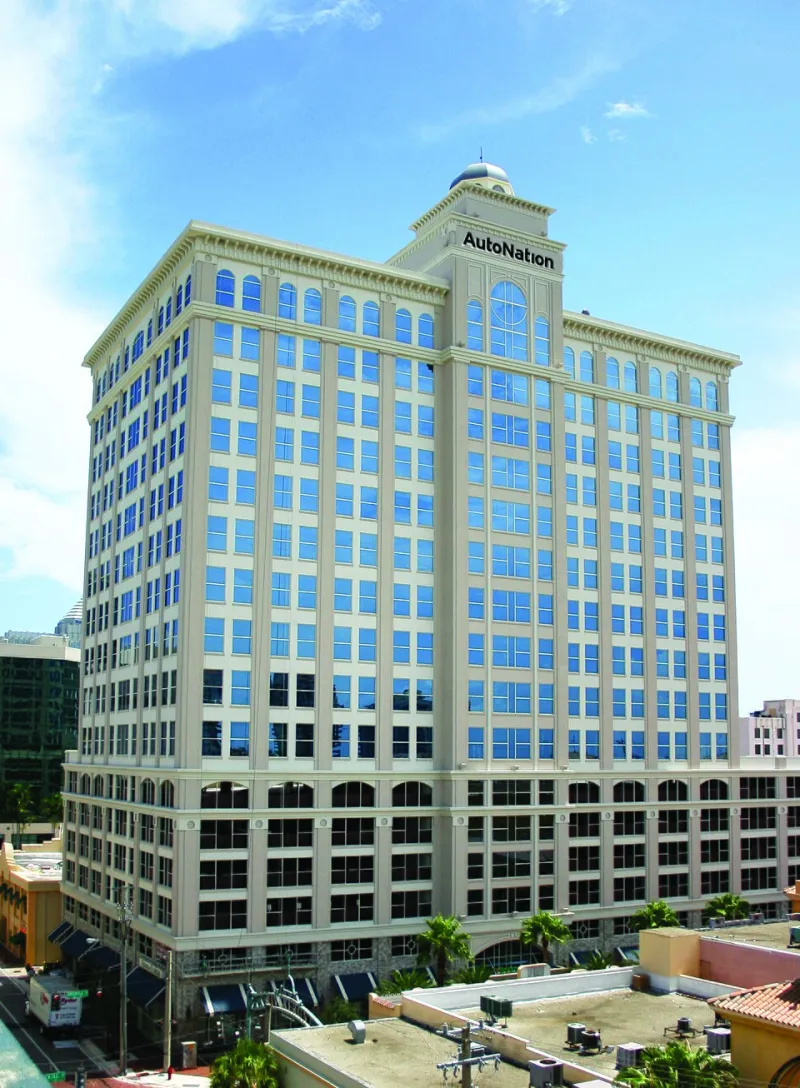
Photo: empty suburban office park building exterior daylight, via usercontent.one
For decades, the suburban office park was a cornerstone of American corporate life — a sprawling campus of glass and steel where thousands of employees commuted each morning, badge in hand. Today, those same campuses are increasingly quiet. Not because of a single dramatic disruption, but because of a deliberate, calculated retreat by mid-market companies that have run the numbers and concluded that conventional office real estate no longer pencils out.
This is not a story about remote work ideology. It is a story about balance sheets.
The Financial Calculus Behind the Shift
For companies with revenues between $50 million and $500 million — the segment broadly defined as the mid-market — office real estate has historically represented one of the largest fixed costs after payroll. In many major metropolitan areas, Class A suburban office space commands lease rates that have remained stubbornly elevated even as vacancy rates climb.
According to data from commercial real estate analytics firm CoStar, suburban office vacancy rates in markets such as Dallas, Atlanta, and the greater Chicago area have risen to levels not seen since the aftermath of the 2008 financial crisis. Yet asking rents in many of those same submarkets have not fallen proportionally, creating a peculiar standoff between landlords anchored to pre-pandemic valuations and tenants increasingly unwilling to absorb costs for space that sits largely unoccupied.
For mid-market executives, the arithmetic has become difficult to ignore. A company leasing 40,000 square feet of suburban office space at $30 per square foot is spending $1.2 million annually before factoring in utilities, maintenance, and build-out amortization. If that space is operating at 40 percent utilization on any given day — a figure consistent with workplace analytics data from firms such as Density and Envoy — the effective cost per occupied seat becomes extraordinary.
"The conversation has fundamentally changed," said one corporate real estate strategist at a consulting firm that advises mid-sized manufacturers and professional services companies. "Three years ago, executives were asking how they could bring people back to the office. Now they're asking whether the office, as currently configured, is the right asset at all."
From Headquarters to Hub-and-Spoke
The model gaining traction among mid-market firms is not the complete elimination of physical office space, but rather a deliberate reconfiguration of it. Companies are trading large, centralized leases for smaller, strategically placed footprints — sometimes called hub-and-spoke arrangements — that prioritize collaboration over daily attendance.
In practice, this often means retaining a reduced headquarters presence in a city center while establishing smaller satellite offices or co-working memberships closer to where employees actually live. Providers such as WeWork, Industrious, and Regus have positioned themselves to capture this demand, offering flexible terms that mid-market companies find far more palatable than the seven- to ten-year commitments typical of traditional commercial leases.
The flexibility premium is real. Co-working arrangements generally cost more per square foot than conventional leases. However, when companies account for the ability to scale space up or down with minimal friction, many find the trade-off worthwhile — particularly in an environment where workforce planning horizons have compressed dramatically.
The Impact on Commercial Property Markets
The aggregate effect of this behavioral shift is beginning to register in commercial real estate valuations, and analysts warn that the full impact may take years to materialize fully.
In markets such as suburban New Jersey, the Research Triangle in North Carolina, and the Inland Empire of Southern California, office park properties that once attracted institutional investors as stable, income-producing assets are now generating significantly less interest. Cap rates — the yield investors expect relative to a property's income — are expanding, which in real estate terms signals declining valuations.
Some properties are being repositioned entirely. Developers in Phoenix and Denver have begun converting underperforming suburban office buildings into mixed-use developments incorporating residential units, medical facilities, and light industrial space. While such conversions are capital-intensive and not universally feasible given structural and zoning constraints, they represent an acknowledgment that the original use case for many of these properties has weakened permanently.
Commercial mortgage lenders are paying close attention. Regional banks and life insurance companies with significant exposure to suburban office loans have begun tightening underwriting standards for refinancings in this asset class, a development that could accelerate distress among property owners who had been counting on favorable terms to extend their debt.
What Corporate Strategists Are Watching
Beyond the immediate financial mechanics, mid-market executives are weighing longer-term strategic considerations as they make real estate decisions.
Talent acquisition remains a central factor. Companies that have eliminated geographic constraints on hiring report access to a broader candidate pool, particularly for specialized technical and professional roles. For mid-market firms that cannot always compete on compensation with large-cap employers, the ability to recruit nationally — or even internationally — represents a meaningful competitive advantage.
Operational resilience is another driver. The pandemic exposed the fragility of organizations concentrated in a single physical location. Distributed workforce models, even partial ones, provide a degree of redundancy that many mid-market risk managers now view as prudent rather than merely convenient.
That said, not every industry or business model is suited to a reduced physical footprint. Companies in manufacturing, professional services requiring in-person client interaction, and regulated industries with specific facility requirements face meaningful constraints on how far they can reduce their office presence.
A Structural Shift, Not a Cyclical Blip
Commercial real estate professionals who have navigated previous downturns caution against conflating this transition with the temporary dislocations of past recessions. Prior contractions in office demand were largely cyclical — tied to economic slowdowns that eventually reversed. The current shift, they argue, is structural, driven by changes in how work is organized that are unlikely to fully unwind regardless of macroeconomic conditions.
For mid-market companies, the decisions being made now about real estate commitments will shape their cost structures and organizational models for years to come. For the commercial property sector, the challenge is equally consequential: adapting to a tenant base whose relationship with physical space has been fundamentally and perhaps permanently altered.
The office park, as a concept, is not disappearing. But its role in the American corporate landscape is being renegotiated — one lease expiration at a time.